SQUAD by GTCO — Fraud Prevention & Risk Control Room
Multi-tenant fraud evaluation microservice with decoupled streaming persistence and maker-checker case workflows.
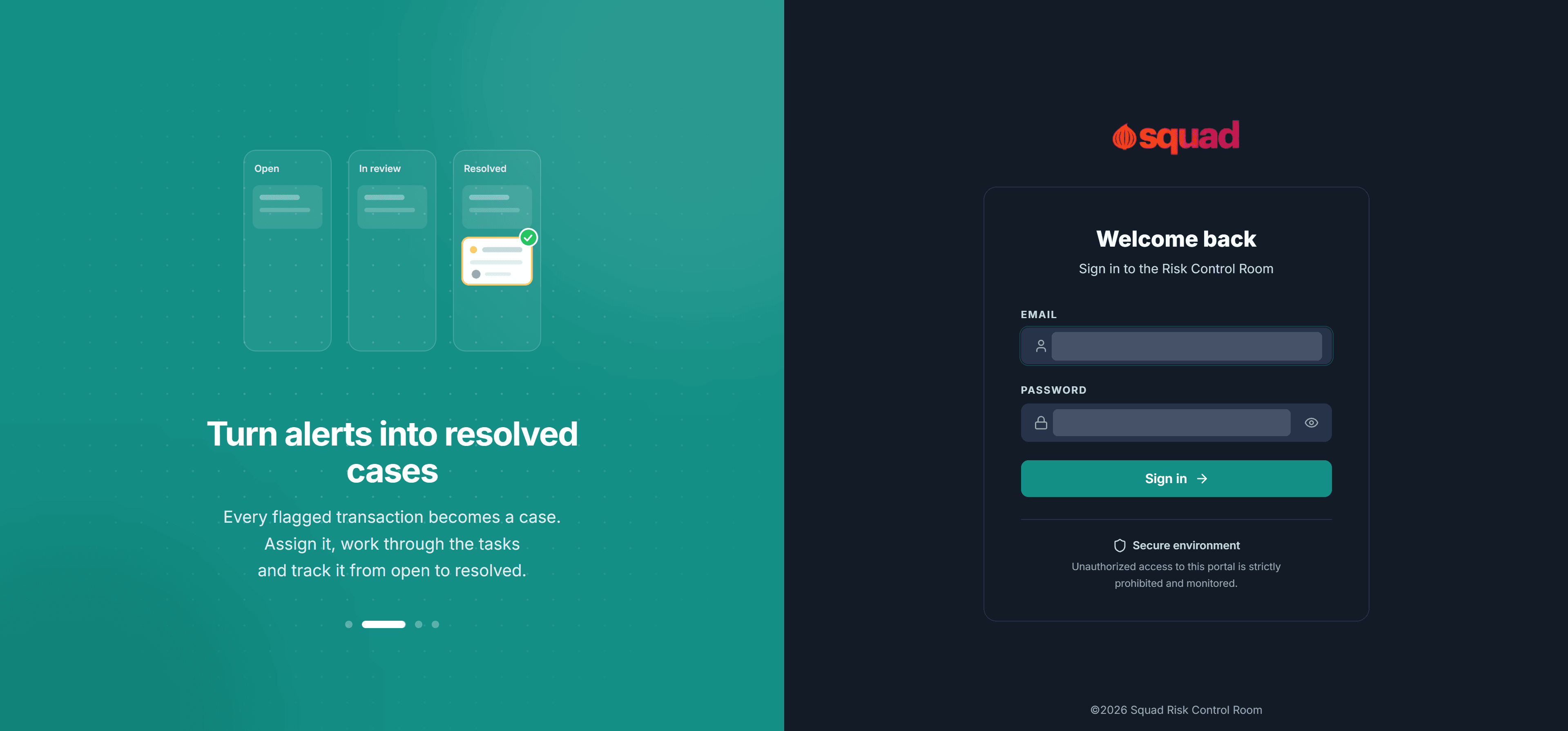
A multi-tenant fraud prevention microservice engineered to evaluate incoming payment transactions using deterministic rule evaluation alongside machine learning risk scoring across pre-authorization and post-notification flows.
Evaluating financial transactions in real time requires low evaluation latency. If audit logging, rule telemetry, and state persistence are coupled to the synchronous scoring path, database lock contention and network latency directly degrade transaction throughput.
Engineered a decoupled microservice architecture where the primary evaluation path performs low-latency rule and model scoring, streaming audit records into Redis Streams. Dedicated asynchronous workers consume the streams to batch-persist transaction trails into PostgreSQL, paired with a maker-checker finite state machine for analyst investigations.
Served as the backend engineer on an allocated project team dedicated specifically to building and deploying this real-time fraud prevention microservice. Engineered the evaluation microservice using Python, FastAPI, and async SQLAlchemy. Decoupled the critical scoring path from database writes using Redis Streams and asynchronous background workers. Implemented a maker-checker case investigation finite state machine with automated audit trails and multi-tier AML STR/SAR approval gates.
Streamed audit logs into an in-memory Redis Stream buffer instead of performing synchronous PostgreSQL inserts during the pre-authorization cycle, isolating payment authorization from disk I/O latency spikes. Implemented a formal maker-checker finite state machine to enforce segregation of duties between analysts and compliance officers.
Maintaining sub-5ms evaluation throughput under heavy payment spikes while guaranteeing complete, immutable audit persistence and strict regulatory compliance without disk contention.
Successfully deployed in production at SQUAD by GTCO as the backend microservice powering fraud prevention and analyst investigation workflows.
In financial infrastructure, latency optimization cannot compromise regulatory compliance. Decoupling the critical real-time path from asynchronous persistence achieves both evaluation speed and complete auditability.